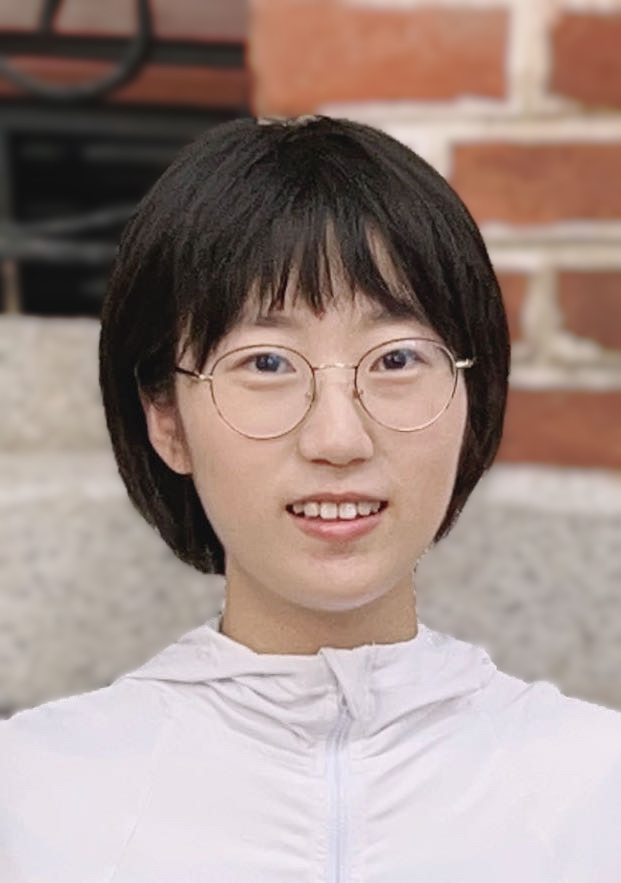

Portrait of Xiang Zheng
Targeting MLE roles

Machine Learning Engineer · AI Researcher

Xiang Zheng (郑想)

I build efficient and interpretable generative AI systems, with a focus on diffusion models, scientific machine learning, and model reasoning.

I am an M.S. student in Computer Science at Georgia Tech and a Research Intern at Microsoft Research, where I work on efficient planning and reasoning methods for generative models. Previously, I contributed to the open-source LLM post-training framework verl and conducted research at UC Berkeley's BAIR and Westlake University on scientific machine learning and diffusion models.

Diffusion Language Models

Efficient Generative AI

Scientific Machine Learning

Model Interpretability

Where I have worked

Experience

Research and engineering across generative AI, ML systems, and scientific computing.

Research Intern

Microsoft Research · DKI Group

  • Built ReGuide, a controllable planning framework that adapts classifier-free guidance to Tiny Recursive Models through exponential tilting and cross-window latent-state reuse.
  • Achieved a state-of-the-art D4RL score of 111 on Hopper with 10× fewer parameters than the baseline while analyzing why recursive models can outperform diffusion models on reasoning tasks.

Advised by Dr. Fangkai Yang and Dr. Lu Wang.
Planning Tiny Recursive Models D4RL

Open Source Contributor

verl · LLM Post-training Framework

  • Contributed multimodal continuous-token rollouts for AgentLoop, including an end-to-end DeepEyes-v1/Qwen2.5-VL-7B GRPO recipe on 8×A100 GPUs, merged upstream in volcengine/verl#6804.
  • Contributed On-Policy Self-Distillation and led reference-parity validation, reproducing official TRL training dynamics and Avg@12 results across AIME24/25 and HMMT25 in volcengine/verl#6909.
RL Post-training Multimodal Agents Distributed Training

Research Assistant

Berkeley AI Research Lab (BAIR) · UC Berkeley

  • Built ODE-1000, a 1,000-task benchmark with symbolic-equivalence diagnostics, and fine-tuned five Qwen and Llama models on 900 examples across 8 GPUs.
  • On Qwen3-0.6B, increased execution rate from 27% to 97% and successful-run accuracy from 63.0% to 87.6%, while reducing mean relative L2 error from 0.371 to 0.104.
  • Improved in-context operator learning across Transformer architectures by 50% through scientific data augmentation, with stronger generalization on forward and inverse ODE/PDE tasks.

Advised by Prof. Michael Mahoney.

LLM Fine-tuning Model Evaluation Scientific ML

Research Assistant

Westlake University · AI for Scientific Simulation and Discovery Lab

  • Built a multi-resolution wavelet-domain diffusion framework with inference-time guidance for indirect control of physical systems and released the first 2D incompressible fluid benchmark for this setting.
  • Designed a BIC-based scoring framework that constructs per-token DAGs from discrete-diffusion probabilities and incorporates causal structure into sampling to improve accuracy and throughput.
  • Developed a discrete diffusion model that learns inter-token masking schedules through maximum-entropy reduction, producing a more interpretable generation order.

Advised by Prof. Tailin Wu.

Diffusion Models Scientific Computing Causal Modeling

Academic background

Education

2026 — 2028 (Expected)

Georgia Institute of Technology

M.S. in Computer Science

Status
Current
Location
Atlanta, GA

2024 — 2025

University of California, Berkeley

EECS Visiting Student

GPA
4.0 / 4.0
Location
Berkeley, CA

2021 — 2025

South China University of Technology

B.Eng. in Artificial Intelligence

GPA
3.89 / 4.0
Rank
3 / 80

Selected highlights

Recognition

A compact selection of scholarships, technical awards, and competitions.

UC Berkeley BGA Scholarship Top 2.5%
Best Technical Solution Award UC Berkeley RDI
National Undergraduate Innovation Grant SCUT
First-Class Academic Scholarship Top 5%
The Mathematical Contest in Modeling (MCM) Meritorious Winner
iGEM Competition Silver Award

Let's connect

Interested in building useful AI systems.

I am interested in machine learning engineering opportunities involving generative models, model efficiency, and AI systems.

xzheng353@gatech.edu